Our dad used to drive us to his hometown in a rusty motorcycle that made loud coughing noises as he stepped on the levers. The highway to the south was a long stretch of road, sometimes unpaved, with a few buses zooming past us and spewing a generous amount of smoke and dust.
The almost two hour trip would consist mostly of Papas monologue about family responsibility and education, but at that time my siblings were too young to understand, so I guess he intended the talk for me. Unfortunately, I mostly heard the howling of the wind throughout the trip, and his voice was more of a soft drone to my ears.
My fathers well meaning talks about responsibility, education, and career seemed to have left little impression on me.
At fifteen, during my senior year in high school I still had no idea what I wanted to be, unlike my classmates who were set on becoming lawyers or accountants like their parents. He was elated when I was admitted at the state university in Diliman, the beginning of my decade long stint in Manila, which eventually would turn into a mad job hunt from architectural firms to corporate careers that offered big bucks and little satisfaction.
When my family migrated to the States, my father and I came into agreement that I return to school in Tacloban to study Nursing so I can join them in the US in a few years time.
Surprisingly during our rotations in nursing school, I found what I was missing in my previous job: the human connection. Whether we were in a far-flung community where we stayed during our immersion, or in public hospitals where our patients were mostly impoverished, I realized that despite the tedious work and little pay, nurses and physicians in our country are able to touch the lives of so many people.
It need not even be as complicated or technical as applying the leads for an ECG, or perhaps administering nasogastric feeding; it was a simple, How are you feeling today?, or a pat on the shoulder, a sympathetic ear, or a smile, that soothes an ailing patient.
That for me was a turning point, because it was then I realized I wanted to pursue medical education after nursing school. But the journey to medical school itself was a harrowing one, we had lost both our parents—my mother succumbed to pulmonary embolism during my junior year, and my father passed away a week before the Nursing board exam.
By Gods grace I was able to get my license despite the turmoil, but the dream of becoming a doctor seemed to have become impossibly distant. There was a chance, a friend told me, because my scholastic records may help me get into a state-funded medical school.
After taking the National Medical Admission Test in the summer of 2011, I received a letter informing me that I qualified for the initial screening at a medical school in Iloilo. I found myself facing a panel of seven doctors for my interview at Roxas Hall in West Visayas State University a few weeks later. I also applied for the Pinoy MD scholarship at the University of the Philippines in Palo, Leyte during the same month.
By May, I got the verdict from both WVSU and UP Palo: I didnt make it, and the Pinoy MD program had been discontinued for that year.
With scholarships out of the question, I spent some time contemplating my remaining optionslike practicing as a nurse here, or perhaps working in the Middle East like our late parents did. In the first place, medical education was expensive, labor intensive, and with little guarantee that the time and resources invested would pay off, but by a fortuitous twist of fate someone believed in me enough to help with the tuition, so I was able to join the multitude of young, hopeful medical students of RTRMF in June.
I thought I could just traipse in and do well, just as I did in nursing school, but I was mistaken. To earn the right to wear a white coat often involved study sessions at 3 a.m. for five straight days, memorizing a litany of muscles, tendons, nerves, and bones. Reading and re-reading for a minimum of 3-5 long exams per week with subjects like Pathology, Surgery and Internal Medicine, to name a few. Throughout the weeks we were completely engrossed in a maelstrom of hospital duties, lab work, practical exams, bi-monthly, and final exams.
Competition was cutthroat, as one of my mentors so bluntly said, You need a good rank in class, or otherwise you would be left with little options for good hospitals during internship.
The reality is that in the Physician Licensure Exam you will be pitted against the graduates of the best medical schools in the country, and the complacent ones wont make it. So study like you never did before, take in all the criticism when you make mistakes, even when you get yelled at. Finally, learn to work well with your group, because in Medicine its all about survival.
My first year was spent adjusting to the frenetic pace, with that lingering feeling of inadequacy that I wasnt accustomed to. Medical school was a whole new ballgame, and I needed a new strategy. By second year my classmates and I have adapted to the weird study schedules and long hours, with a unique coping mechanism for each student.
Amid all the chaos of the academic workload, there was also the financial challenge brought about by our loss. Being the eldest, I assumed the role of my parents and managed our household.
We had to make adjustments with our lifestyle to the point where I found myself one summer barefoot, plugging holes in the roof. One day, a faucet in the kitchen malfunctioned, and we couldnt afford a plumber, so I decided to fix the problem myself. With my hands unsteady on the hacksaw as I tried to cut the pipes, I nearly screamed in frustration. I decided either we continue to live like this or I do my best to remedy the situation. So I hunched back under the sink and finished the job.
My brothers and I do what we have to do to cope while I continue with my studies, finally realizing the value of hard work and education which our late parents, both Overseas Filipino Workers, had put so much of a premium to.
Every week, I value the time spent in the hospital where we face the bleeding, agonizing realities of diseased bodies and weary minds.
Our hands that palpate the paper-thin skin of someones grandmother, serve to remind us of the frailty of human life. Even as we enter the ward of a public hospital, it was a cacophony of wails, hushed whispers among patients and their significant others, the mechanical sounds of a suction machine, and the stern orders of a consultant doing rounds. Patients spilled over to the corridors, and those in the humid wards endured the smell of bodily fluids and the glaring lack of privacy.
I will never forget one particular duty in the Delivery Room. I was assisting a birth but I froze when the membranes burst. The baby was stillborn. The feet of the baby came first; the head was stuck in the vaginal canal and took almost twenty minutes for the obstetrician to deliver.
Lying on the delivery table, the mother stared at the ceiling, unmoving. I asked her if she had a name for the baby, so that I could baptize him before giving him to the waiting relatives.
Our eyes met as she touched the plastic rosary on her neck.
I could never forget the look in her eyes- regret maybe, or emptiness. I carefully wrapped the fetus and made a sign of the cross on the forehead with water. I had no time to linger on those feelings because there was another woman giving birth.
I was asked to change gloves and assist, and this time the mother gave birth to a healthy baby girl.
Funny how the ebb and flow of life in the hospital almost goes unnoticed. How new life is born in an instant, and how deaths become merely statistics. I suppose when one deal with these things everyday, it becomes routine, and health care professionals have learned long ago to tuck their emotions safely out of reach while at work.
As I laid the crying neonate on her bassinet, it suddenly occurred to me that I was in the same Neonatal Intensive Care Unit (NICU) my Mom worked in many years ago as a nurse at Eastern Visayas Regional Medical Center.
It dawned on me, that whether it was fate or destiny that led me, I finally ceased searching because I found the path of what I was meant to do in life after all, right under my nose the whole time. I guess in our youth we sometimes have our head in the clouds looking for something amazing, but failing to grasp the truth before our very eyes, that what my Mom did many years ago on a daily basis at the hospital, was nothing less than remarkable.
I've learned that despite failures and shortcomings, life goes on, and will continue to have meaning as we keep on striving. Our struggles orient us to the realities of our time as we try to find our place in the world, keeping in mind that we wont always be on top, that we cant always be right, and that it’s okay to make mistakes now and then.
I consider myself very lucky to have the privilege to be in medical school, and I remind myself that each time the going gets tough.
Our patients have become the reason for us to get up early morning to study, or prepare for our duty at the hospital. There was always a new face looking expectantly, as I examined them clumsily with my novice hands.
They were friendly, rude, cooperative, and stubborn; some were obese, emaciated, and frail; I've seen and examined convicts, sex workers, and the destitute. They were human beings in pain, the very basis of the existence of the healing arts, and being tasked to assist in their physical, mental, and emotional recovery was an awesome responsibility.
Entering the halls of a hospital was like getting a glimpse of the Promised Land, when someday I can append the hard-earned M.D. to my name, and become the first doctor in our family.
Recently, I took the car to visit our parents graves. As I was driving down the same stretch of road my father used to travel, with me and my siblings on his motorcycle, I never felt so calm and so sure of myself, smiling as the wind howled and whipped my hair, and with my dads face smiling back in the mirror.
--------------------
Thaddeus C. Hinunangan, MD
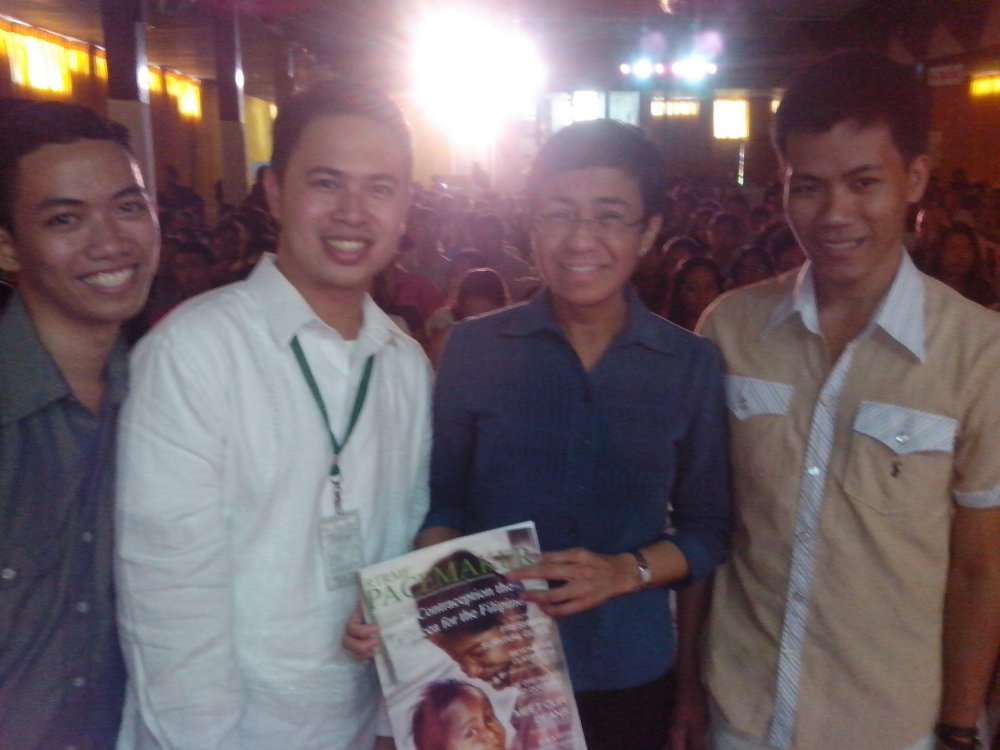
First published in Health and Lifestyle magazine in 2012. This essay, first in over twenty plus articles in the following years, paved the way for the Contributing Writer position in H&L Magazine.